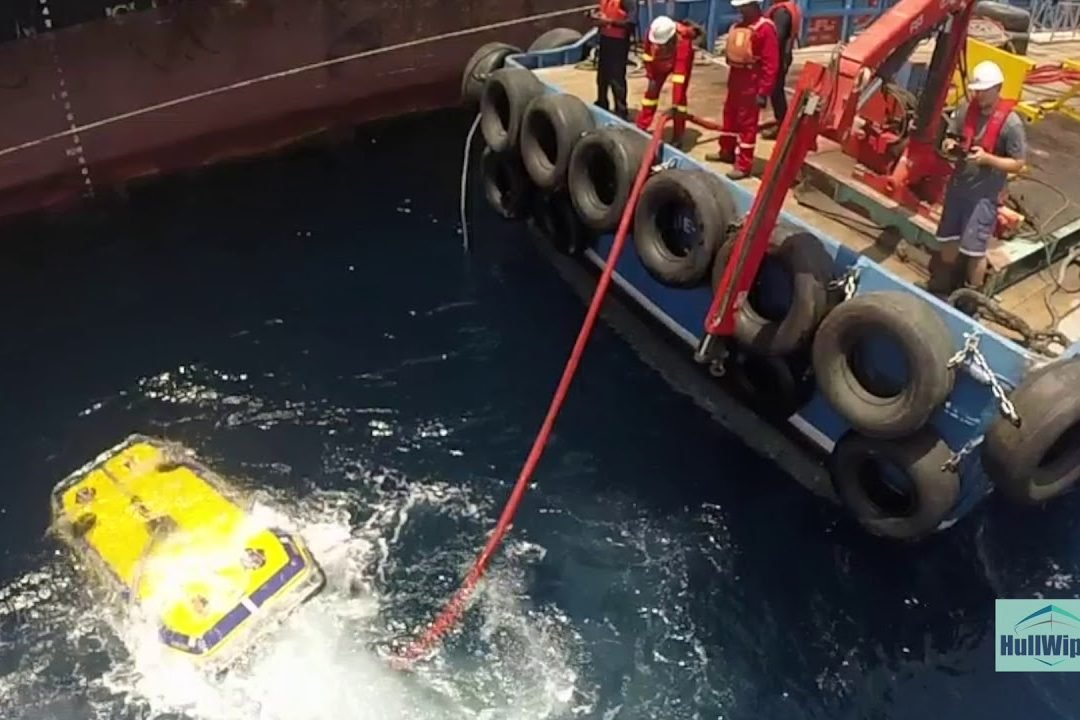
The maintenance of ship hulls is an essential activity in naval conservation. Its correct execution directly influences the operational performance, energy efficiency, and economic sustainability of merchant fleets. One of the biggest challenges is biofouling, i.e., the accumulation of marine organisms attached to the hull. This fouling generates greater resistance to the ship's movement, which increases fuel consumption and raises pollutant emissions.
To address this problem, cleaning protocols are now being applied that combine advanced mechanical techniques with environmentally friendly solutions. This approach makes it possible to restore the hull to optimal condition without damaging the anti-corrosion coatings. In addition, modern methodology takes into account factors such as the type of fouling, the hull material, the existing protection system, and environmental conditions. This allows for customized treatments that optimize the performance of each vessel and extend its useful life.
Specialized Processes
The maintenance process begins with an underwater visual inspection using high-definition cameras. This inspection allows us to identify the type of organisms attached and assess the condition of the cathodic protection system. After that, the appropriate technique is selected according to the characteristics of the case.
Among the most commonly used methods are:
- Rotary brushes with controlled density for light encrustations.
- High-pressure washers for tougher stains.
- Specialized vacuum systems for removing material without damaging the surface.
Each phase of the service is documented with photographs and included in a technical report. This serves as a reference for future maintenance and allows the condition of the hull to be monitored over time.
Impact on Performance
Implementing a preventive hull maintenance program generates measurable benefits. For example, it reduces hydrodynamic resistance by up to 25% and decreases fuel consumption by 15% to 20%. It also extends the hull's service life by 30% to 40%.
Another important aspect is compliance with international environmental regulations. These regulations seek to prevent the transfer of invasive species via ship hulls. With the right techniques, it is possible to maintain a balance between operational efficiency and environmental responsibility.
Implementing preventive maintenance programs demonstrates measurable reductions in hydrodynamic resistance of up to 25%, decreases in fuel consumption of 15-20%, and extensions in hull life of 30-40%. Additionally, it ensures compliance with international environmental regulations regarding the prevention of invasive species transfer through vessel hulls, establishing an optimal balance between operational efficiency and environmental responsibility.