
Commercial diving is a high-risk professional activity that requires specialized and certified equipment. Unlike recreational diving, which focuses on exploration and enjoyment, commercial diving involves complex technical work in extreme conditions. At P&P Underwater Solutions, safety is an absolute priority. That's why we use top-of-the-line equipment that meets strict international standards.
Differences between Recreational and Commercial Diving
Before delving into the equipment, it is important to understand the difference between the two types of diving
Recreational diving is limited to depths of up to 40 meters and short dives. Commercial diving, on the other hand, can exceed these depths, requires long work sessions, and demands multiple backup systems, constant communication, and greater physical endurance.
Breathing Systems
1. Surface-Supplied Air
This is the most commonly used system in commercial diving. Air is supplied from the surface via an umbilical hose, ensuring an unlimited supply and direct communication with the supervisor.
Main components:
- Certified high-pressure air compressor
- Reinforced umbilical hose (over 100 meters)
- High-resistance first-stage regulator
- Integrated communication system
- Safety valve and emergency bypass
2. Commercial-grade SCUBA equipment
It is only used in jobs with limited access. It is more robust than the recreational one.
Features:
- Large capacity tanks (15–18 liters)
- High-performance regulators
- Redundant system with professional octopus
- Industrial pressure gauges
Diving Helmets
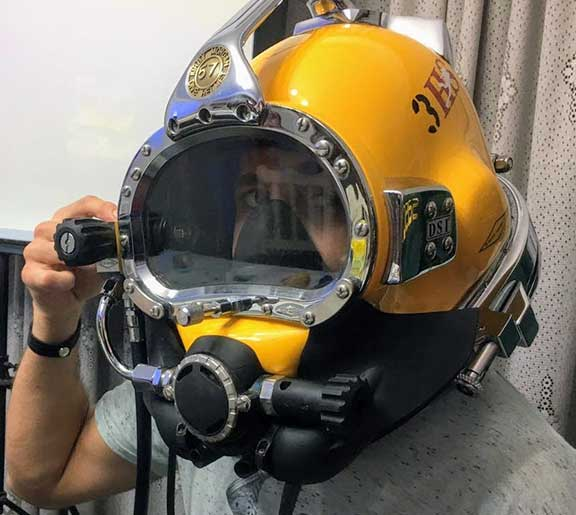
Helmets are essential for prolonged or highly complex work.
Main types:
- Fiberglass: lightweight and durable
- Metal: Ideal for welding or extreme environments
- Demand system: Delivers air only when inhaling
Protective Suits
Professional Wet Suits
For warm waters. They use thick neoprene, reinforcements, and industrial zippers.
Commercial Dry Suits
Essential for cold water or long dives
Features:
- Vulcanized material or dense neoprene
- Independent inflation and deflation valves
- Integrated boots
- Replaceable seals
- Airtight zippers
Hot Water Suits
They receive hot water from the surface to maintain their body temperature.
Safety Equipment
Communication System
It includes a built-in microphone and headphones, a surface amplifier, redundant line, and full recording capabilities.
Harnesses and Lifelines
More durable than recreational BCDs. They feature:
- Quick rescue system
- Multiple D rings
- Lifeline connected to surface
Professional Lighting
It must offer at least 1000 lumens, long battery life, impact resistance, and helmet mounting option.
Commercial Diving Knife
Cutting and survival tool, with stainless steel blade, combined edge and multi-point sheath.
Specialized Tools
Cutting and Welding Equipment
It includes oxyhydrogen torches, arc welding with special electrodes, hydraulic saws and plasma equipment.
Hydraulic and Pneumatic Tools
For strength work:
- Underwater drilling
- Impact wrenches
- Certified grinders
- Pneumatic hammers
Inspection Equipment
Underwater cameras, laser measurement, portable ultrasound and corrosion sensors.
Decompression Equipment
Hyperbaric Chamber
Essential for deep surgeries. Ensures immediate treatment for decompression sickness.
Commercial Diving Computers
They offer advanced profiles, full registration, configurable alerts, and a connection for data analysis.
Maintenance and Certification
The equipment requires strict controls:
- Inspection before and after each dive
- Monthly maintenance
- Annual certification
- Parts replacement according to useful life
- Pressure and performance tests
- Detailed record of the entire system
Regulations and Standards
All equipment complies with:
- IMCA
- ADCI
- DICAPI
- ISO standards
Investment in Security
Equipping a commercial diver may require between $15,000 y $50,000 USD, investment necessary to guarantee safety and efficiency in every operation.
Conclusion
Commercial diving equipment is a life support system that allows for complex work to be carried out in harsh environments. At P&P Underwater Solutions, the constant updating of our equipment and the training of our staff guarantee high-quality services and complete safety.
Valid licenses: DICAPI | APN
Certified equipment | Highly trained staff